

























AI for video advertising: 5 best practices for PPC campaigns


In 2026, AI is no longer something marketers are debating. It’s actively shaping nearly every part of digital advertising and creative.
Because the human brain processes visuals far faster than text, video ads are becoming more important and more effective, especially as creative costs continue to fall.
The question is no longer whether PPC teams should use AI for video advertising.
It’s how to use it to drive better results, produce stronger creative, and avoid issues like hallucinations and governance gaps that can undermine performance.
Why AI adoption alone no longer drives PPC performance
Nearly 90% of advertisers now use generative AI to build or version video ads, according to IAB data.
Adoption, however, does not equal performance.
The difference between winning and losing campaigns on Google Ads, particularly YouTube, is no longer defined by manual bidding tactics.
It comes down to who supplies the algorithm with the strongest inputs.
Ad platforms have shifted from keyword-based logic to intent-driven AI recommendations.
Advertisers still trying to manually control every placement are competing against systems that process millions of signals per second.
Here are five best practices for using AI in video PPC campaigns to improve performance and deliver higher-quality signals.
1. Abandon the perfect cut for modular asset libraries
Historically, video production for PPC followed a TV-style workflow: script, shoot, edit, polish, and publish a single “perfect” 30-second spot.
In the era of Performance Max, that approach has become a liability.
AI-driven campaign types are not designed to work with one finished video.
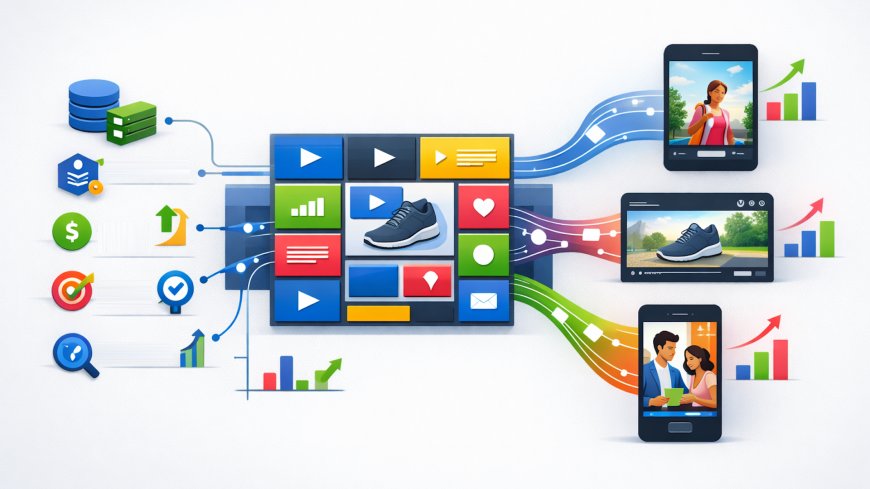
They perform best when given a library of assets they can assemble dynamically based on a user’s device, intent, and behavior.
Instead of uploading a single video, advertisers need to give the AI building blocks it can combine on its own.
- The hook: Three to five different six-second opening clips, including visual-first, text-heavy, and UGC-style options.
- The body: Multiple value propositions, such as speed, price, or quality.
- The CTA: Varied end cards, ranging from soft prompts to direct conversion asks.
This works because Google’s AI may determine that one user browsing Shorts late at night converts best on a UGC-style hook with a “Learn more” CTA, while another watching a tech review on desktop responds better to a polished product demo with a “Buy now” message.
If only one video is supplied, the AI’s ability to personalize the experience is severely limited.
Google’s move toward formats like Direct Offers shows where this approach is heading.
2. Swap keywords for intent orchestration
The keyword is no longer a hard trigger for video ads.
On platforms like YouTube, keywords now function primarily as signals that help AI understand the general theme of the audience an advertiser wants to reach.
Google continues to push advertisers toward Demand Gen and Video View campaigns, which rely on lookalike segments and search themes rather than exact-match targeting.
When targeting is left completely open, AI systems tend to optimize for the path of least resistance.
That often leads to low-quality placements, such as kids’ channels or accidental clicks on mobile apps. Advertisers need to actively orchestrate intent.
- Negative keywords matter: In an AI-driven environment, telling the system who not to reach is often more powerful than specifying who to reach.
- First-party data seeding: Upload high-value customer lists and designate them as primary signals. This pushes the AI to find users who resemble top customers, not just recent site visitors.
Dig deeper: From Video Action to Demand Gen: What’s new in YouTube Ads and how to win
3. Train the algorithm with value-based conversion data
The biggest mistake PPC managers make with AI-driven video campaigns is feeding the algorithm weak conversion signals.
When a video campaign is optimized for “Maximize conversions” and the conversion fires on a generic page view or an unqualified lead, the AI will aggressively seek out more users who click and bounce. It optimizes for volume, not value.
To make AI work for video, advertisers need to use offline conversion imports and enhanced conversions.
- Step 1: A user clicks a video ad and submits a lead form.
- Step 2: The CRM scores the lead, such as qualified versus junk.
- Step 3: The qualified status is sent back to Google as the conversion event.
Optimizing for qualified leads instead of raw submissions trains the AI to ignore low-quality signals and prioritize users with real purchase intent.
This approach is essential for scaling video spend without driving up customer acquisition costs.
4. Embrace lift measurement over last-click attribution
AI-driven video formats, particularly YouTube Shorts, are difficult to evaluate using traditional attribution models.
A user may watch a video ad during a commute, remember the brand, and then search for it directly on a laptop days later.
Legacy attribution models, such as last click, assign all credit to the brand search campaign and none to the video ad that generated the demand.
When video budgets are cut because return on ad spend appears low, brand search volume often declines soon after.
Advertisers should move toward media mix modeling (MMM) or, for a simpler approach, monitor directional consistency.
- The test: When video spend increases by 20%, does blended CPA remain stable while total revenue grows?
- The metric: Shift focus away from view-through conversions, which can be inflated, and toward incremental lift. Google’s lift measurement tools enable holdout tests that split audiences into exposed and unexposed groups to demonstrate the true impact of video campaigns.
Dig deeper: Why incrementality is the only metric that proves marketing’s real impact
5. Understand that many users start with sound off
Despite the rise of audio-driven trends, a significant share of video consumption, especially in the discovery phase, happens with sound off or at low volume.
AI tools can automatically generate captions, but effective video creative goes beyond subtitles. The visual hierarchy must communicate the message clearly without relying on audio.
Review video ads using a visual AI analysis tool or by watching them on mute.
Within the first three seconds, the viewer should be able to answer three questions:
- What is it? Product or brand visibility.
- Who is it for? Clear demographic signaling.
- What do I do? A visible call to action.
If the AI cannot clearly detect the brand logo or product within the first 25% of video frames, brand lift performance will suffer.
Pre-testing creative with AI-based object recognition tools helps ensure brand assets are prominent enough for proper classification and delivery.
PPC is becoming more architectural
The role of the PPC manager has changed.
Marketers are no longer pilots making constant bid adjustments. They are architects designing the environment in which AI systems operate.
In 2026, the advantage will belong to teams that prioritize creative inputs and data quality.
Building modular assets and closely managing the signals an algorithm learns from will make AI video advertising one of the most scalable levers in the marketing stack.
Treating AI-driven video like a traditional display campaign simply trains the system to spend budget with limited measurable return.
Start by auditing your signals to understand what campaigns are actually optimized for.
Determine whether you are driving toward deep-funnel actions, such as purchases or qualified leads, or simply optimizing for vanity metrics.
Next, modularize creative by identifying a top-performing static image and using an AI video generator to turn it into a six-second bumper that can be tested and scaled across video placements.
Regardless of how AI evolves, video remains a format people value.
Structuring programs thoughtfully and maximizing the tools available will be critical to winning with video advertising.
What's Your Reaction?
 Like
0
Like
0
 Dislike
0
Dislike
0
 Love
0
Love
0
 Funny
0
Funny
0
 Angry
0
Angry
0
 Sad
0
Sad
0
 Wow
0
Wow
0